
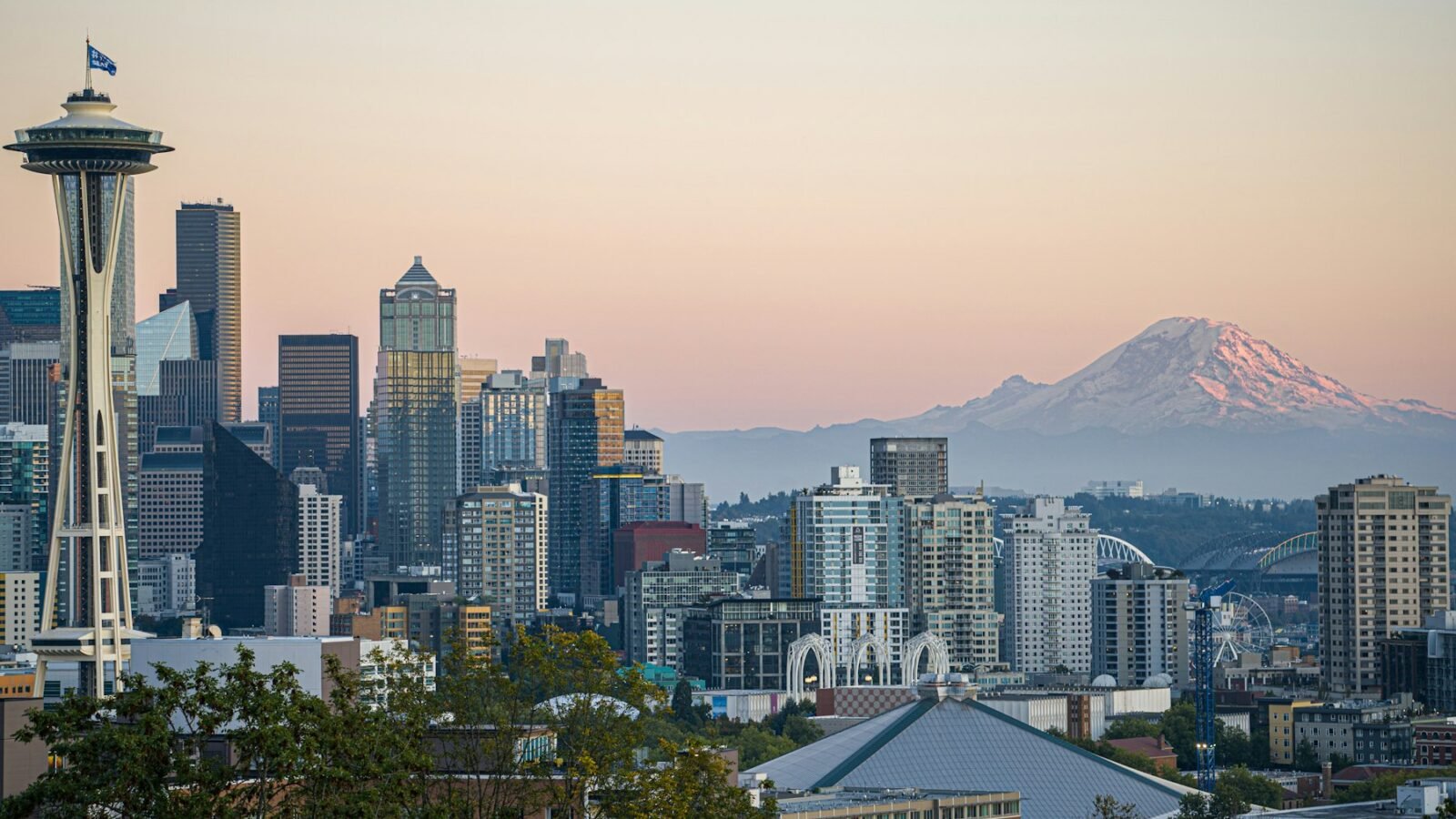
Seattle has a reputation for rain, but the reality is more nuanced. The city has a mild marine climate: winters are cool, gray and damp, while summers are usually dry, sunny and pleasant. Extreme heat and heavy snow are rare. Here is what to expect throughout the year and how to dress for it.
Is it really always raining?
Not exactly. Seattle typically gets less total rain in a year than many East Coast cities such as New York. What makes it feel rainy is the number of gray, drizzly days between fall and spring. Rain often comes as light, steady drizzle rather than big storms, which is why many locals skip the umbrella and wear a good rain jacket instead.
Fall (September to November)
September is often one of the nicest months of the year, with mild temperatures and plenty of sunshine. The rainy season usually starts in October, and by November gray skies and frequent showers are the norm. Days get noticeably shorter.
What to pack: layers, a waterproof jacket with a hood, and water-resistant shoes.
Winter (December to February)
Winters are cool and damp, with daytime temperatures usually in the 40s Fahrenheit. Days are short around the winter solstice, with sunset in the late afternoon. Snow in the city is uncommon and usually melts quickly, but when it does stick, Seattle’s hills can make driving difficult. The nearby Cascade Mountains, on the other hand, get plenty of snow for skiing.
What to pack: a warm insulated rain jacket, sweaters, waterproof boots and a hat.
Spring (March to May)
Spring is changeable: sun, showers and wind can all happen on the same day. Temperatures slowly rise, and the city fills with blossoms. The cherry trees on the University of Washington campus are a famous early-spring sight.
What to pack: layers you can add or remove, and a light rain jacket.
Summer (June to August)
Summer is Seattle’s reward for the gray months. July and August are usually dry and sunny, with comfortable temperatures and very long days, as the sun sets late in the evening. Heat waves can happen, and many older homes do not have air conditioning, so it is worth planning for a few hot days.
What to pack: light clothing, sunglasses, sunscreen and a light layer for cool evenings by the water.
Tips for living with Seattle weather
- Invest in a good rain jacket: it is more practical than an umbrella in light drizzle and wind.
- Get outside anyway: locals hike, bike and run year-round. With the right gear, rainy days are rarely a reason to stay in.
- Plan for short winter days: many people use daylight lamps and make the most of sunny breaks.
- Check the forecast for the mountains separately: conditions in the Cascades can be very different from the city.
Need ideas for gray days? See our list of 12 rainy-day things to do in Seattle. Moving here? Read our Seattle neighborhoods guide.
FAQ
What is the best time of year to visit Seattle?
July through September usually offers the driest, sunniest weather, which makes it the most popular time to visit.
Does it snow in Seattle?
Snow is uncommon in the city itself and usually does not last long, but the nearby mountains receive heavy snowfall every winter.